TJX Companies Free Cash Flow Analysis: $4.9B FCF Deep Dive
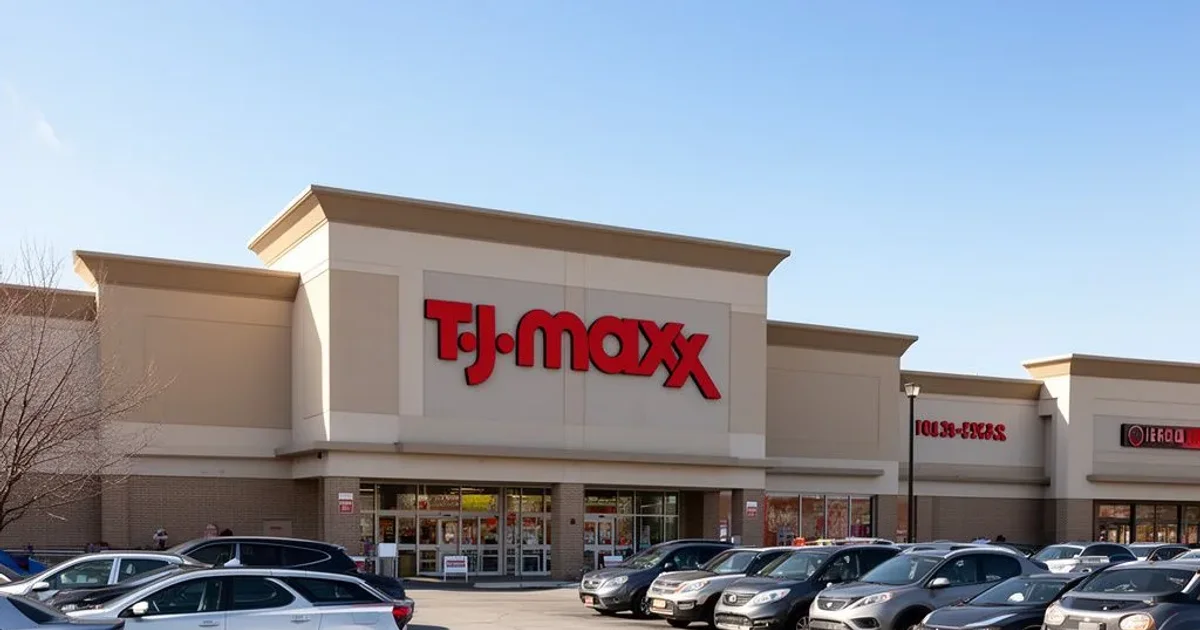
Educational content only. This analysis is for informational purposes and does not constitute financial advice or a recommendation to buy or sell any security. Data sourced from SEC EDGAR filings and company earnings releases. Verify figures independently before making investment decisions.
Analysis Date: May 23, 2026 | Data Source: SEC Filings (10-K) | Analysis Period: FY2022–FY2026
TJX Companies generated $4,917M of free cash flow in FY2026, its highest annual result in the five-year dataset, on $60.4B of revenue. That FCF number represents a 25.0% five-year compound annual growth rate from FY2022's $2,012.7M, an exceptional compounding record for a company operating approximately 5,000 physical stores across four retail chains. The business did this while paying $1,842M in dividends, repurchasing $2,522M of stock, and still accumulating $553M of cash. The off-price model is generating more cash than management can deploy at acceptable returns, a genuinely rare problem for a brick-and-mortar retailer to have.
This analysis covers FY2022 through FY2026 and examines the durability of TJX's cash generation, the capital intensity of running a scaled off-price retail operation, and whether the current valuation of 35.6x trailing FCF reflects reality or optimism. The off-price sector has historically been more resilient than specialty retail during economic downturns, and TJX's five-year data provides a useful test across post-pandemic normalization, inflation, and consumer spending shifts.
⚠️ Important Disclaimer: This analysis is for educational and informational purposes only. It does not constitute investment advice, financial advice, or any recommendation to buy, sell, or hold any security. All data is sourced from publicly available SEC filings and is believed to be accurate but is not independently verified. Always conduct your own due diligence and consult with a licensed financial advisor before making any investment decisions. Past performance does not guarantee future results.
FCF Performance Summary
| Metric | FY2026 | FY2025 | 5-Yr Average |
|---|---|---|---|
| Free Cash Flow | $4,917M | $4,198M | $3,618M |
| FCF Margin | 8.1% | 7.4% | — |
| YoY FCF Growth | +17.1% | -3.2% | — |
| Revenue | $60.37B | $56.36B | — |
| Operating Cash Flow | $6,874M | $6,116M | — |
| Capital Expenditures | $1,957M | $1,918M | — |
| FCF Yield (Market Cap) | 2.8% | — | — |
| P/FCF Multiple | 35.6x | — | — |
Market Cap: $175.0B | Enterprise Value: $185.9B | Current Price: $158.27 (as of May 23, 2026)
Cash Generation Quality
FY2026 FCF of $4,917M against net income of $5,494M produces a conversion ratio of 89.5%. That ratio is healthy for a capital-intensive retailer. It reflects a business where CapEx of $1,957M is partially offset by D&A of $1,247M, resulting in net cash capital consumption of $710M annually. The FCF/NI ratio has been consistent across the dataset: 89.5% in FY2026, approximately 82% in FY2024 when the working capital bridge was more favorable, and above 100% in periods of particularly favorable inventory cycles. There is no evidence of earnings quality issues in the conversion ratios.
Stock-based compensation of $214M in FY2026 consumed only 4.4% of FCF, the lowest SBC intensity in this analysis batch. Owner earnings of $4,703M represent a 2.7% yield on the $175B market cap. That is remarkably low dilution for a large-cap company with tens of thousands of employees. It reflects TJX's mature compensation structure, where equity awards are a modest supplement to cash compensation rather than a primary retention mechanism. The result is that reported FCF substantially equals what shareholders actually earn after accounting for dilution.
The FCF/OCF conversion ratio of 71.5% in FY2026 reflects a store-based business with meaningful ongoing capital requirements. CapEx of $1,957M running at 1.6x D&A confirms TJX is funding new store openings, remodels, and distribution infrastructure, not simply maintaining existing assets. This is a business that actively invests in its physical footprint. The contrast with BellRing's 0.3x CapEx/D&A is the difference between an asset-light brand and a store-based retailer that needs square footage to grow.
FY2026 Capital Allocation Breakdown
| Use of FCF | Amount | % of FCF |
|---|---|---|
| Dividends | $1,842M | 37.5% |
| Share Buybacks | $2,522M | 51.3% |
| Cash Accumulation | $553M | 11.2% |
| Total | $4,917M | 100.0% |
TJX returned 88.8% of FY2026 FCF to shareholders through dividends and buybacks while still accumulating $553M of cash. That capital allocation discipline, returning the vast majority of FCF while maintaining a modest cash buffer, reflects a management team with high confidence in recurring cash generation. The dividend at $1,842M is large in absolute terms and represents a 3.8x coverage ratio against a typical retail dividend track record. The buyback program at $2,522M is substantial but was executed at a 35x+ FCF multiple, which reduces its value accretion compared to repurchases at lower valuations.
5-Year FCF Trend Analysis (FY2022–FY2026)
TJX's FCF has followed a clear upward staircase pattern over five years, with a brief pause in FY2025 before reaching a new high in FY2026.
FCF ($ Millions)

FY 2022  ████████████████                          $2,012.7M
FY 2023  █████████████████████                     $2,627.0M
FY 2024  ████████████████████████████████████      $4,335.0M
FY 2025  ███████████████████████████████████       $4,198.0M
FY 2026  ████████████████████████████████████████  $4,917.0M

  5Y CAGR: +25.0%  |  3Y CAGR: +6.5%  |  5-Yr Avg: $3,618M
Trend Narrative
FY2022 and FY2023 represent TJX's post-pandemic operating reset. FCF of $2.0-2.6B reflected the re-opening dynamics of the store fleet: inventory investment was heavy as supply chains normalized, consumer spending patterns were shifting, and CapEx was rising from the FY2021 pandemic lows. OCF of $3.1B in FY2022 on the limited data available was below the run-rate implied by revenue, a characteristic of the working capital demands of a treasure-hunt retail model that requires constant fresh inventory rotation.
The step-change to $4.3B of FCF in FY2024 was driven by operating leverage, not revenue acceleration. Revenue grew 8.6% to $54.2B, but net income rose 12.3% and OCF grew from $4.1B to $6.1B, a jump that included a $459M favorable working capital bridge. That FY2024 figure is the most important caution in the dataset: part of the step-up into the $4B+ FCF range was helped by timing items, not purely structural margin improvement. FY2025's modest 3.2% FCF decline on 4.0% revenue growth, with working capital roughly neutral at -$35M, is more representative of the underlying trend.
FY2026's $4,917M of FCF on $60.4B of revenue is a clean result. Revenue grew 7.1%, net income grew 12.9%, CapEx was roughly flat, and working capital was only a modest drag at -$81M. That combination of sustained top-line growth, improving operating leverage, and stable CapEx is the base case for continued FCF compounding. The 3-year CAGR of 6.5% from FY2024 to FY2026 is more representative of what investors should expect going forward than the 25% 5-year CAGR that includes the post-pandemic base.
Operating Cash Flow and D&A Context
| Metric | FY2026 | FY2025 | FY2024 |
|---|---|---|---|
| Operating Cash Flow | $6,874M | $6,116M | $6,057M |
| Net Income | $5,494M | $4,864M | $4,474M |
| D&A | $1,247M | $1,104M | $964M |
| FCF/OCF Conversion | 71.5% | 68.6% | 71.6% |
D&A of $1,247M in FY2026 has grown steadily from $964M in FY2024, consistent with a store fleet that keeps opening new locations and amortizing store build-out costs. The CapEx/D&A ratio of 1.6x in FY2026 (down from 1.8x in FY2024) suggests the investment program is maturing slightly: new store CapEx is growing, but D&A is catching up as the installed base expands. If this ratio continues drifting toward 1.3-1.4x, FCF margins could improve even on flat revenue, as the depreciation add-back grows faster than incremental CapEx.
Capital Expenditure Profile
| Year | CapEx | CapEx/Revenue | CapEx/D&A |
|---|---|---|---|
| FY2026 | $1,957M | 3.2% | 1.6x |
| FY2025 | $1,918M | 3.4% | 1.7x |
| FY2024 | $1,722M | 3.2% | 1.8x |
| FY2023 | $1,457M | 2.9% | — |
| FY2022 | $1,045M | — | — |
CapEx has grown from $1,045M in FY2022 to $1,957M in FY2026, tracking the expansion of the store network across TJ Maxx, Marshalls, HomeGoods, and international formats. At 3.2% of revenue, CapEx is modest compared to department store peers or grocery chains, reflecting the relatively simple fit-out requirements of off-price stores (no elaborate fixturing, no custom technology systems). However, CapEx consistently exceeds D&A, which means TJX is still in net investment mode, a business truth that the 71.5% FCF/OCF ratio captures directly.
FCF Quality Score: 8/10 — High Quality
TJX earns an 8/10 on FCF quality, a score that reflects genuinely durable cash generation from a competitively advantaged retail model, constrained from a higher rating by its physical store dependence and valuation. The five-year record is difficult to argue with: FCF has grown in four of five years, margins have been consistent at 7-8%, dilution is minimal, and capital returns remain fully covered by cash generation. An 8/10 is appropriate for a business of this quality at this scale.
The primary strengths are the off-price model's structural advantages. TJX buys excess and end-of-season merchandise from thousands of suppliers at discounts, which creates a purchasing dynamic that benefits from the disruptions that hurt full-price retailers. That buying model, combined with the treasure-hunt shopping experience, generates customer frequency and gross margins that are structurally better than conventional retail. The result is a business where FCF margins have held at 7-8% even while the company invested $1.7-2.0B annually in new stores and distribution. SBC of only 4.4% of FCF is the lowest in this analysis group, which means that owner earnings of $4.7B closely track the headline FCF figure.
The primary constraint on a higher score is the physical retail model itself. TJX operates approximately 5,000 stores; every one of them is a fixed-cost commitment that must produce adequate revenue per square foot to justify the operating and occupancy costs. A sustained consumer spending downturn, rising lease costs, or a meaningful shift toward digital shopping (off-price has been more resilient to e-commerce than most retail categories, but not immune) could impair the FCF margin. FY2023's 5.3% FCF margin, when revenue growth slowed significantly, is a reminder that the model produces thinner cash in less favorable conditions.
The valuation-related risk is worth stating directly: at 35.6x trailing FCF and a 2.8% FCF yield, TJX is priced for continued flawless execution. The FY2024 working capital benefit of $459M, which contributed to the initial jump into the $4B+ FCF range, is unlikely to repeat at that magnitude. If FY2027 FCF grows at the 3-year CAGR of 6.5% rather than the 5-year CAGR of 25%, it will be approximately $5.2B, implying a forward P/FCF of roughly 33x at the current stock price. That is still expensive by most FCF-based valuation frameworks.
Forward Outlook: Key Scenarios
TJX's FCF trajectory over the next two years depends primarily on revenue growth sustainability and whether operating leverage continues to translate revenue gains into FCF growth faster than CapEx and lease costs increase.
| Scenario | Probability | Key Assumptions | Implied FCF Range |
|---|---|---|---|
| Potential Upside | 25% | Revenue growth 8-10%; margin expansion; consumer trade-down tailwind; CapEx/D&A continues normalizing | $5.5B–$6.2B |
| Base Case | 55% | Revenue growth 5-7%; FCF margins hold 7-9%; CapEx stable; steady capital returns | $4.8B–$5.4B |
| Downside | 20% | Consumer spending slowdown; merchandise margin pressure; FCF margin compresses toward 5-6% | $3.2B–$3.8B |
Scenario probability estimates are illustrative only and do not constitute forecasts or price targets.
Catalysts to Monitor
Comparable store sales growth is the single most important operational metric. TJX's FCF leverage is significant: a 1-percentage-point improvement in comparable sales growth on a $60B revenue base translates to approximately $600M of additional revenue, much of which flows through to FCF given the largely fixed cost structure of the store fleet. In FY2026, comparable sales grew approximately 5%. Sustaining that pace while new store openings add square footage would drive FCF well above the base case.
Merchandise margin and buying conditions are the second catalyst. TJX's competitive advantage depends on its ability to source quality merchandise at deep discounts. If branded suppliers tighten their excess inventory management, reducing the pool of opportunistic buys, TJX's gross margins could narrow. Conversely, periods of overproduction or retail bankruptcies (as seen during COVID when inventory flooded the market) create exceptional buying conditions that expand margins. The 2025-2026 environment, with several traditional department stores and specialty retailers under pressure, has generally been favorable for off-price buyers.
CapEx trajectory matters for the FCF margin. If the CapEx/D&A ratio normalizes toward 1.3x from the current 1.6x, either through D&A growing faster as the store base matures or through a moderation in new store openings, FCF margins would improve even on flat revenue. Management's guidance on international expansion (specifically HomeSense/HomeGoods in Canada, Australia, and Europe) will determine whether CapEx stays elevated or begins to moderate as those markets mature.
Overall Assessment: TJX FCF Quality Score 8/10
TJX Companies generated $4,917M of free cash flow in FY2026, its fifth consecutive year of positive FCF growth excluding FY2025's minor dip, on a 25% CAGR from FY2022. The five-year record demonstrates a physical retail business that can compound cash generation through store growth, operating leverage, and the structural advantages of the off-price model. An 8/10 FCF quality score reflects that durability.
The dataset also reveals the limits of extrapolation. The 3-year CAGR of 6.5% from FY2024 to FY2026 is more representative of the business's forward capacity than the 25% 5-year CAGR that benefits from the post-pandemic base. At 35.6x trailing FCF and a 2.8% FCF yield, the market is already pricing in continued strong execution. A compression to 28-30x, still a premium multiple, would imply a share price roughly 15-20% below current levels even if FCF continues growing. That is not a large margin of safety for investors entering at the current valuation.
The FCF Quality Score of 8/10 makes TJX one of the stronger businesses in this analysis batch by cash generation quality. The scoring methodology is explained in Assessing FCF Quality. For FCF margin context relative to consumer discretionary peers, see FCF Margin: Formula and Industry Benchmarks. FCF yield context across sectors is available at What Is a Good Free Cash Flow Yield?. Current screener data on TJX is at the FCF Screener.
⚠️ Disclaimer: This analysis is for educational and informational purposes only. It does not constitute investment advice, financial advice, trading advice, or any recommendation to buy, sell, or hold any security. All financial data is sourced from publicly available SEC filings and is believed to be accurate as of the analysis date but has not been independently audited. Actual results may differ materially from any scenario estimates presented. FCF calculations use operating cash flow minus capital expenditures; alternative definitions may yield different results. Always conduct your own due diligence and consult a licensed financial advisor before making investment decisions. Past performance does not guarantee future results. All investments carry risk, including the potential loss of principal.
Data Sources
- TJX Companies Inc. Annual Reports (10-K), FY2022–FY2026, SEC EDGAR
- TJX Companies Investor Relations Press Releases
- S&P Capital IQ / Bloomberg (market capitalization, enterprise value, share price as of May 23, 2026)