Academic Papers
Research & Analysis on Free Cash Flow Yield
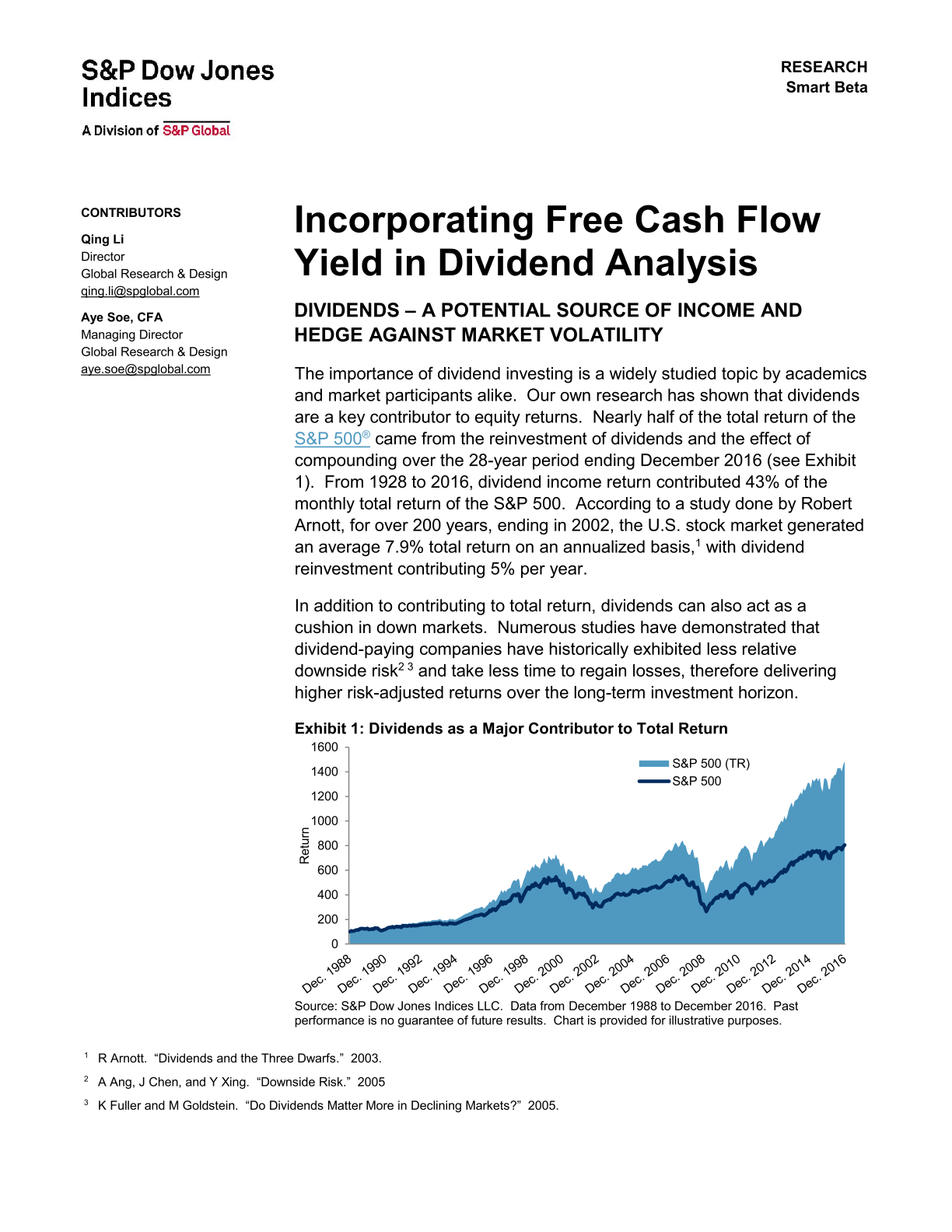
Incorporating Free Cash Flow Yield in Dividend Analysis
This research paper explores the role of dividend investing in generating long-term equity returns. It analyzes the historical performance of dividend-paying stocks, highlighting their potential as a source of income and a hedge against market volatility. The study further examines the significance of free cash flow yield as an indicator of dividend sustainability and quality. By combining dividend yield and free cash flow yield metrics, the paper constructs a hypothetical portfolio that demonstrates improved risk-adjusted returns compared to pure dividend yield or free cash flow yield portfolios.
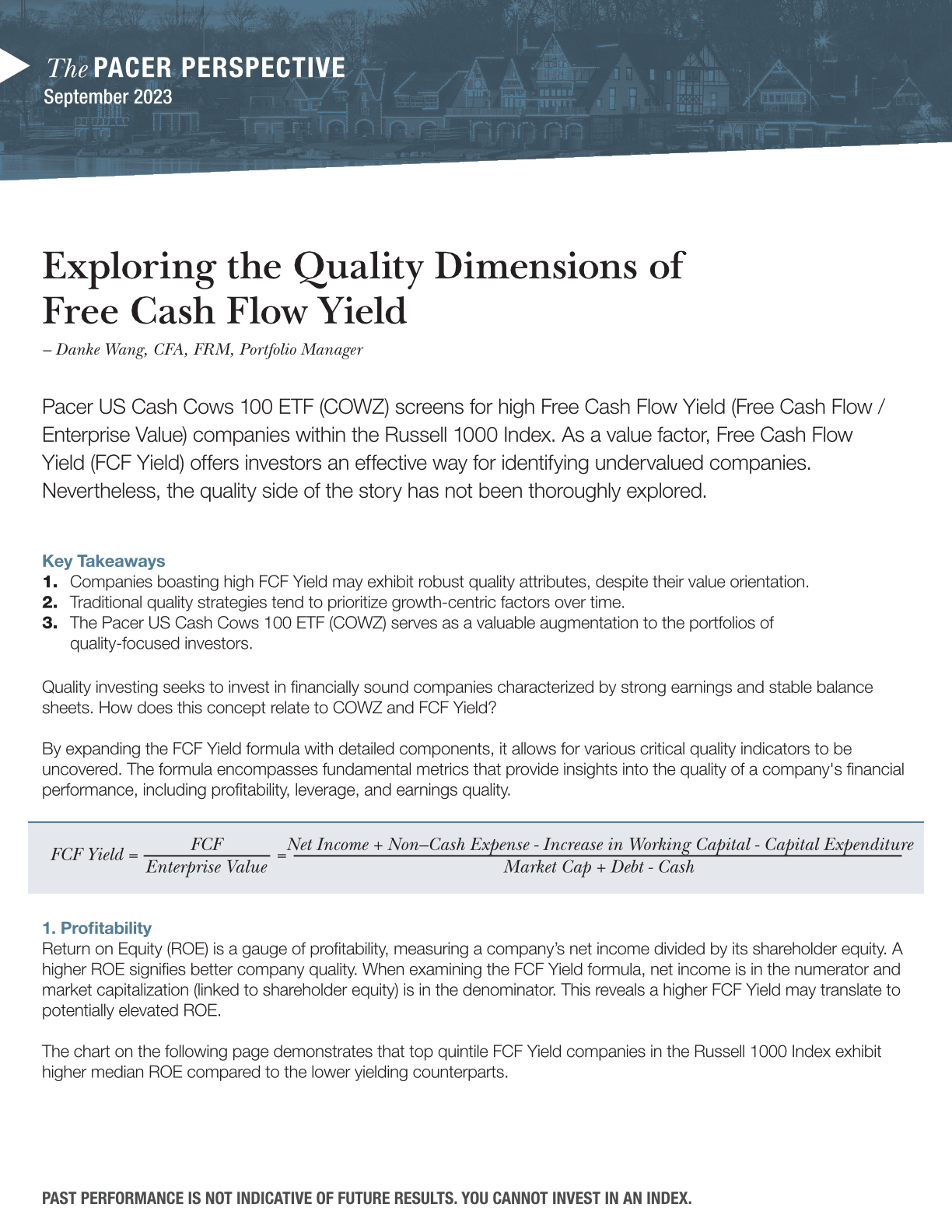
Exploring the Quality Dimensions of Free Cash Flow Yield
This paper examines the quality dimensions of Free Cash Flow Yield (FCF Yield), traditionally viewed as a value metric. Analysis reveals that high FCF Yield companies demonstrate strong quality characteristics through higher profitability (ROE), lower leverage (debt-to-equity), and better earnings quality (lower accruals). The Pacer US Cash Cows 100 ETF (COWZ) combines these quality attributes with attractive valuations, offering investors quality exposure at a significant discount compared to traditional quality-focused investments, which tend to correlate with higher-priced growth stocks.
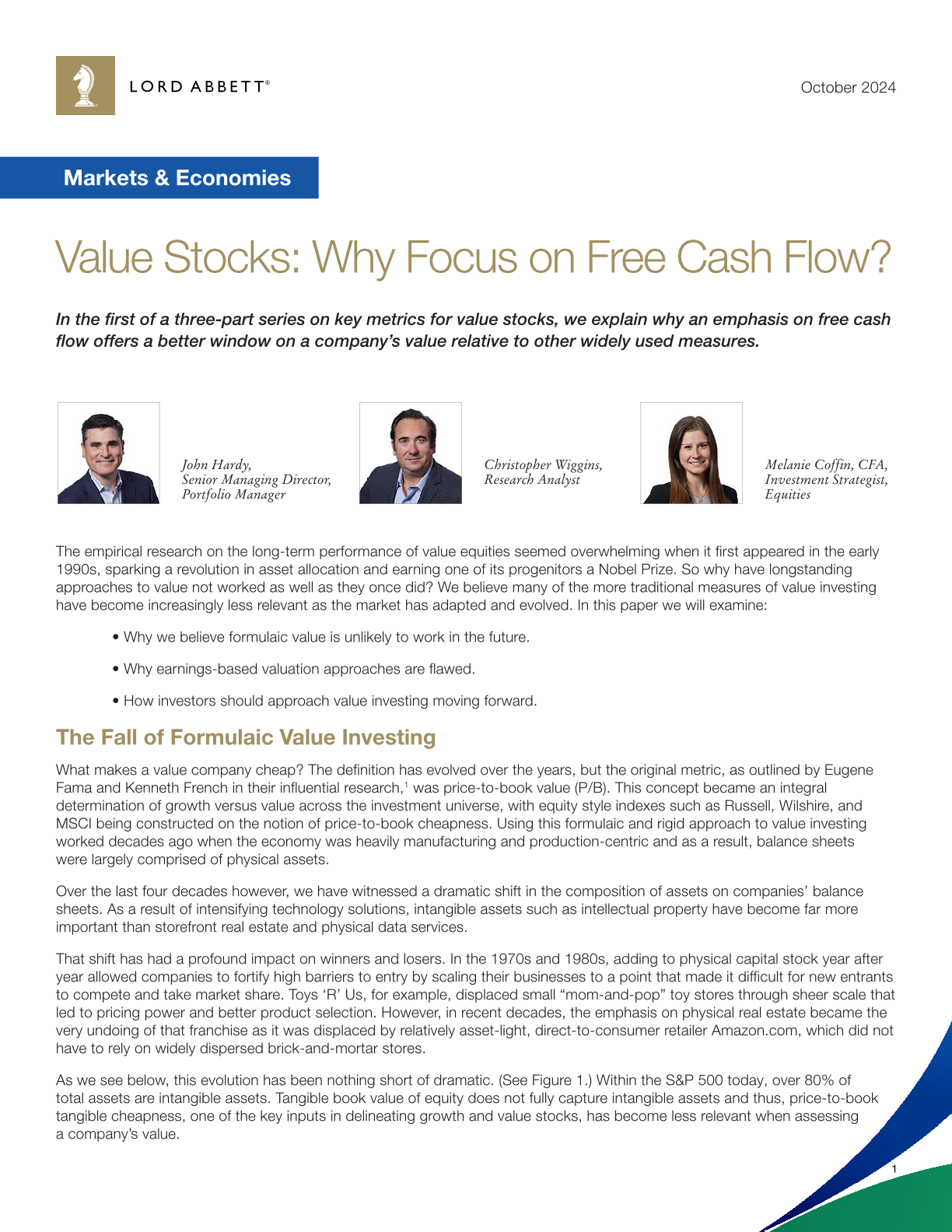
Value Stocks: Why Focus on Free Cash Flow?
This paper argues that free cash flow is a superior metric for value investing compared to traditional measures like price-to-book ratio. As intangible assets now dominate corporate balance sheets (over 80% of S&P 500 assets), earnings-based metrics can be manipulated, while free cash flow provides a clearer picture of financial health and capital efficiency. Historical examples from Enron and WorldCom demonstrate how focusing on free cash flow, especially when combined with quality and stability factors, has significantly outperformed traditional value approaches.
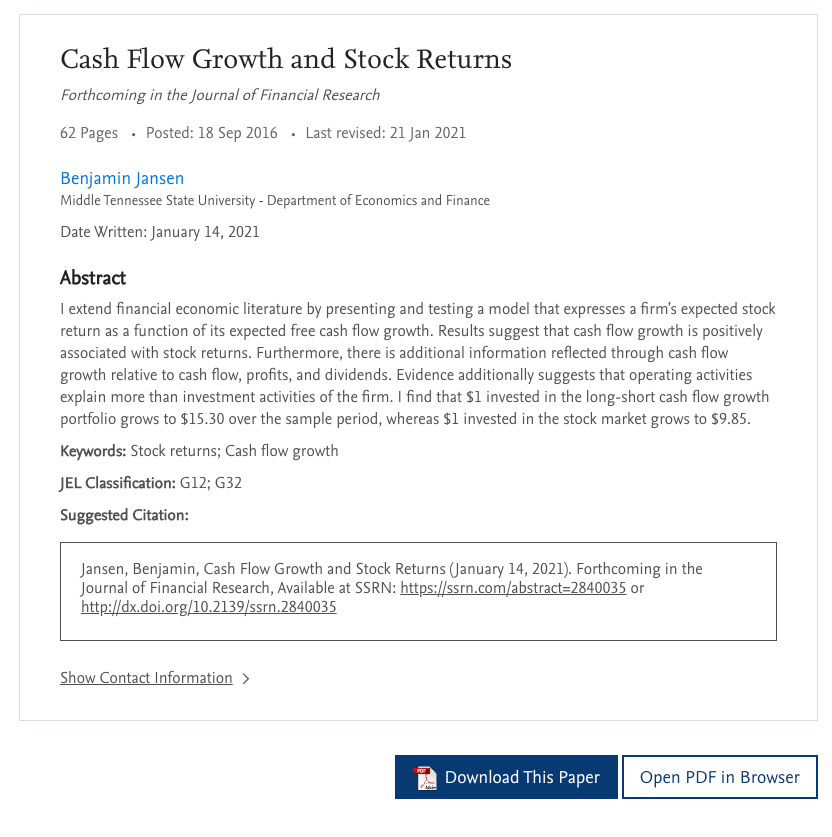
Cash Flow Growth and Stock Returns
I extend financial economic literature by presenting and testing a model that expresses a firm's expected stock return as a function of its expected free cash flow growth. Results suggest that cash flow growth is positively associated with stock returns. Furthermore, there is additional information reflected through cash flow growth relative to cash flow, profits, and dividends. Evidence additionally suggests that operating activities explain more than investment activities of the firm.
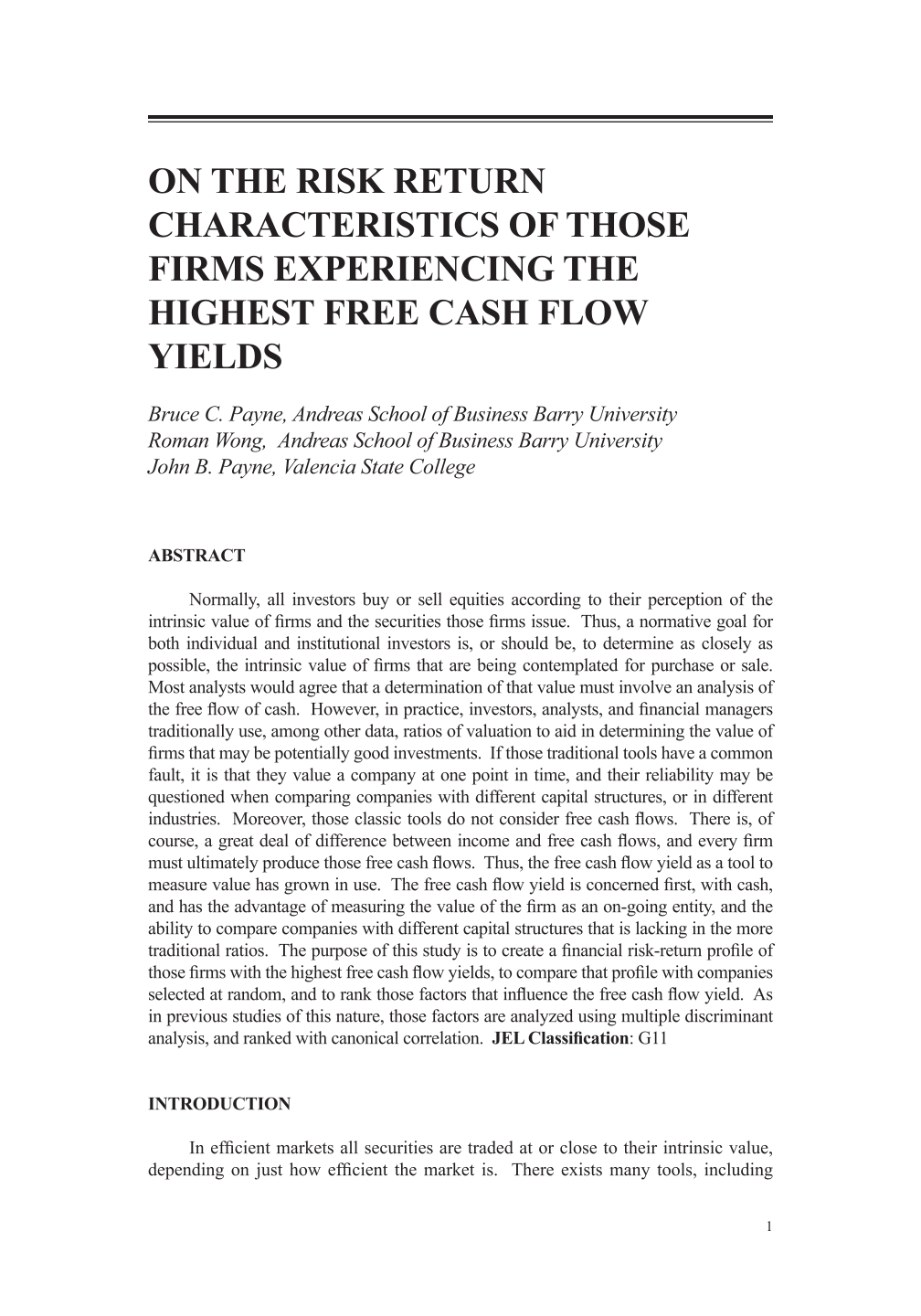
On the Risk Return Characteristics of Those Firms Experiencing The Highest Free Cash Flow Yields
This paper examines firms with high free cash flow yields (FCFY) using multiple discriminant analysis to identify their distinctive financial characteristics. Analyzing seven variables across return, risk, and market perception measures, the study finds that coefficient of variation in earnings most significantly distinguishes high FCFY firms. The model successfully classified 60.7% of firms and was validated for predictive use. These findings provide insights for investors seeking to identify companies likely to achieve high free cash flow yields in the future.